INTRODUCTION
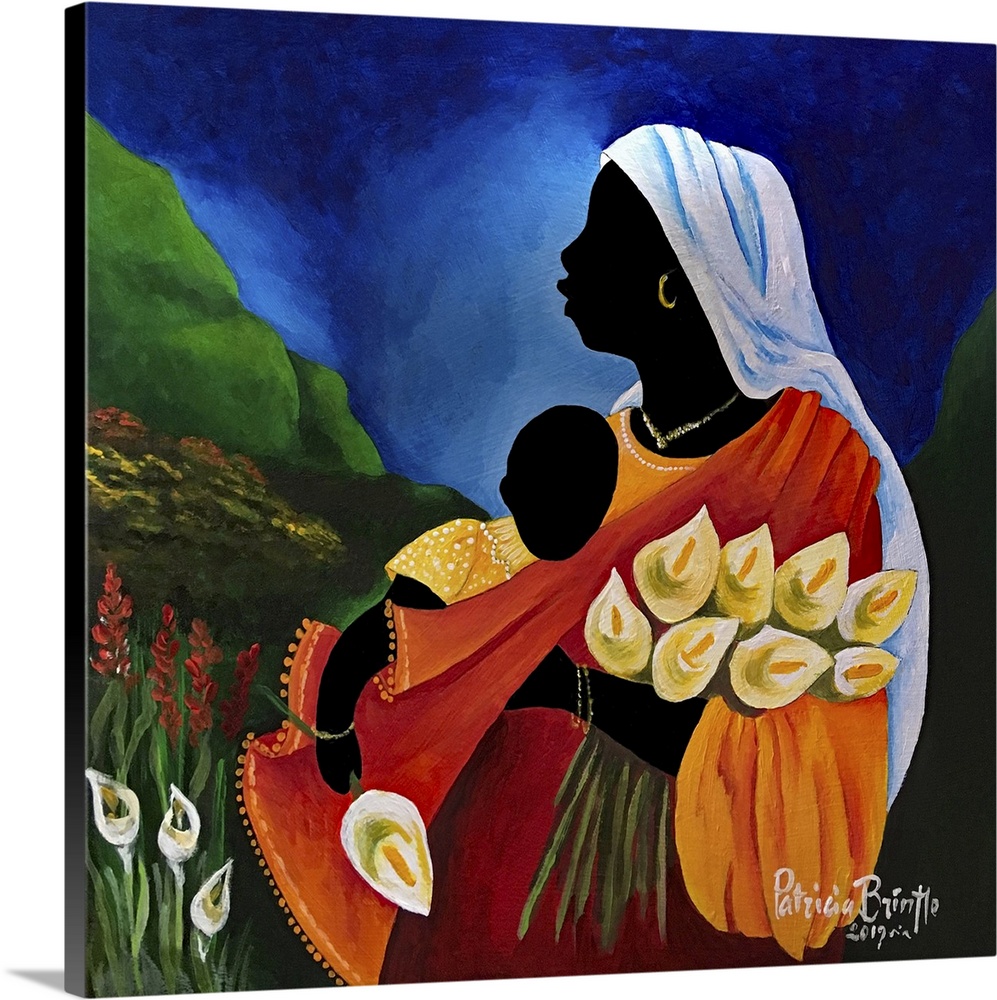
Sadly, it is a HUGE mistake to approach Mary’s narrative like “The Night Before Christmas,” as if her story were only available to us at Christmas time. Mary’s story, when embraced properly, shows us the significance and power of her life, as a spiritual roadmap to female empowerment.
This Gen Z girl from the ‘hood’ [Nazareth] is considered as one of the most important figures in the Bible, yet we act as if Mary is a precious, untouchable deity, only to be approached for the purposes of examining her virginity and her role as Jesus’ mother. But, when we strip back the layers of sentimentality and church mythic traditions applied across the ages, we rediscover the many ways Mary’s life can instruct us, as her sisters who are seeking intimacy with God and divine purpose in God’s kingdom.
And now, THE WORD from Our Sponsor…………………………………………………………………………………….
Luke 1: 26-38 (NAB or NSRV)
“FAVOR is defined by what you are going TO and not by what you are going THROUGH.” (Bishop D.O. Clay – 11/21/2021 – YOUTUBE).
One of the very first things we learned about this young girl in the Lucan narrative, besides her name, is Mary’s status. The word “virgin” is used three times in twelve verses to describe Mary’s social position. In Greek, the word “virgin” holds several meanings:
Verse 1: 27, 28: The Greek is “parthe’nos” meaning: “a marriageable maiden, a woman who has never had sexual intercourse with a man, one’s marriageable daughter, a man who has abstained from all uncleanness.
In this context Luke is informing us Mary is a “marriageable maiden.” In verse 34 when Mary describes herself to the angel, the Greek word is “aner” meaning: with reference to sex, of a male, of a husband, of a betrothed or future husband, with reference to age to distinguish an adult man from a boy. In this context, Mary is informing the angel of something already known by God – Mary has never experienced sex with a male.
Either way, we get the point and discover church tradition will not move on, even though the Evangelist Luke does. We should ask ourselves a serious question at this juncture: “Is this all we care about in Mary’s story? When the angel encounters Mary, we discover Gabriel’s address is three words: “Greetings, favored one!” This address is an interesting one because the angel actually tells Mary to “Thrive!” The sentence in Greek sounds like this: “Thrive, favored one!”
Here is where the dilemma starts for Mary and for us. Let’s look at some of the primary details of Mary’s story:
- Mary was “afraid.” (The angel tells her not to be)
- Mary was confused by the divine announcement (“How can this be?)
- Mary was obedient and submitted to God’s plan (“Here I am – the servant of the Lord.”)
- Mary left her home alone and “set out” to the high country of Judea.
- Mary makes the decision to go to her cousin Elizabeth’s home.
- Mary remained there for three full months
- Mary sings to Elizabeth, “My soul magnifies the Lord and my spirit rejoices in God, my Savior.” Mary then confirms in the song, “I am blessed” and the world will acknowledge this.
- The Lucan narrative tells us Mary was “perplexed” by the angel’s greeting. Some New Testament translations use the term “troubled.” Even before the angel tells her she will be overshadowed and pregnant by the Holy Spirit, Mary is “troubled.” Perhaps so, because the angel’s greeting did not match with her life’s realities. Essentially, we can say Mary did not feel “favored.” But, why not?
Mary’s natural reality did not line up with the angel’s proclamation. Her family was poor. She was born and living in the town of Nazareth – an insignificant agricultural village (remember John 1:46) and she was female. How was this “favored?” Her life did not in any way match the angelic description. Then we hear the angel telling Mary “news” which would have troubled and confused her even more: “The Holy Spirit will come upon you, and the power of the Most High will overshadow you; therefore the child to be born will be holy……”
While we immediately begin to embroider onto Mary’s story the miraculous good news of the virgin birth, we forget the turbulent months ahead for Mary, whereby God’s “overshadowing” produced serious turmoil in her life. Mary was young, pregnant, unwed, confused, and in a dangerous circumstance. Yet, she is called by the angel of God, “favored.”
Question: What does this teach us about her life and ours? What does this tell us about God?
Then, what does Mary do after hearing THE NEWS?
Mary “sets out.” Wait a minute! Can we stop to look at what this means in an ancient context where “virgins” [think very young girls here] were not permitted to leave their homes without permission or a chaperone? While scripture does not tell us specifically where Elizabeth and Zechariah lived, we know the “hill country of Judea” was at least 100 miles from Nazareth. The journey, even by donkey, would have taken Mary a minimum of three days. The text implies Mary travelled alone.
Question: What do these details tell us about Mary’s attitude?
In anybody’s world, this journey feels desperate. Why would Mary travel over 3 days alone, leaving her family to visit her cousin Elizabeth, in the hill country of Judea?
In Nazareth, Mary would have resided with her “nahalah.” This word in Hebrew means extended family. Mary lived in a clan with her mother, father, brothers and sisters, grandparents, aunts, uncles, and cousins. A 3 day journey by herself would have certainly caused an emotional ruckus in her family.
Question: What does this tell us about Mary & Elizabeth’s relationship with each other & with God?
- Upon encountering her cousin Mary, Elizabeth’s womb responds in joy.
- Elizabeth, older than Mary, immediately pronounces a blessing over her.
- Elizabeth speaks prophesy over her young cousin Mary: “Blessed is she who believed that there would be a fulfillment of what was spoken to her by the Lord.”
In chapter 1 of Matthew, Mary obviously informs Joseph of her “condition.” BEFORE the angel of the Lord visits Joseph in a dream, below were his plans for Mary:
“Her husband Joseph, being a righteous man and unwilling to expose her to public disgrace, planned to dismiss her quietly.” (Matthew 1:19)
What is the difference between Joseph’s immediate response and Elizabeth’s.
We find that Mary attaches to God’s overshadowing assignment with obedience, courage, and submission. With spiritual discernment and wisdom, Mary carefully chooses the voices she will consider and obey, and the voices she will not.
Question: What does this tell us about the voices in our lives and how they attach to our divine assignments from the Lord?
More considerations about the Overshadowing Assignment:
- Kingdom assignments do not require a man-made platform – Most of what Mary does to perform her assignment; she accomplishes without seeking shine or flex.
- Divine favor and divine purpose are connected. These two are spiritual sisters.
- Removing distractions, including unwanted voices in our lives, is imperative to our divine assignment completions.
- Godly assignments require Holy Ghost power. We cannot achieve them without the Holy Spirit.
- Spiritual cheerleaders, like Elizabeth, are important to our kingdom assignment completion. Everybody needs authentic cheerleader support!
- God will always use people many consider as “ordinary” to achieve God’s supernatural purposes for humanity.
- Unmerited favor applies to ALL of God’s children, whether we use it or not.
- Spiritual discernment and intimacy with God are natural connectors.
- Submission (getting under God’s mission) and obedience is required for God to use us completely for God’s will.
Finally, we are Mary’s sisters! One of the useful power plays in Mary’s story is to locate ourselves with Mary and what she accomplished. We too have “overshadowing assignments.” These are kingdom calls where God is instructing us and equipping us to do a great work. Instead of viewing Mary’s life as an exception, we should see it as a framework which is available to us, as well. Mary’s life teaches us we can walk the very same path, if we choose to do so. We too can “magnify” the Lord and rejoice in God, our Savior, despite the present realities of our lives. With God’s divine intervention, “nothing is too impossible!”
To God be the Glory!
Our Sending Prayer
Dear Lord, there is none like You! You overshadow me with Your Holy Spirit, and I like Mary, am overwhelmed. Help me to believe and trust in Your power that I may accept Your assignment and do Your perfect will. I acknowledge this is the season for Your work in my life. Grant me courage, wisdom, discernment, and determination to use my gifts, like sister Mary, to bring about Your perfect will in this world. In the matchless and magnificent name of Your son Jesus, I pray. Amen!
The enclosed materials are the property of Maxine E. Garrett and Tabitha’s Daughters Empowerment Series. They may be used by you with our permission which may be revoked at any time. All copies of the materials must include the following notice: “This material is Copyright [2015] Maxine E. Garrett and Tabitha’s Daughters and is distributed with permission.”
 totallyvintagediva